Research
Introduction
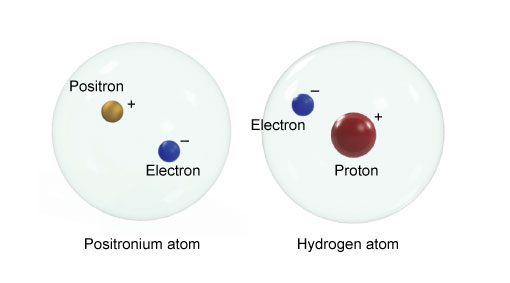
What happens when antimatter and matter meet? (annihilate, repel, bind, or breakup) is a fascinating question. Antimatter ultimately pair annihilate. For example, the positron (the antiparticle of the electron) is converted into gamma rays, while antiprotons and antineutrons are converted into fast pions. It might not be so interesting if it annihilates, but rather the physical processes leading up to annihilation are often considered to be of greater importance. There are various forms of matter containing antiparticles, or antiatoms, one of which is the positronium atom. This is a two body binding system of an electron and a positron, analogous to the hydrogen atom. We focus on studying how positronium atoms interact with matter. We also study the control of atomic quantum states using periodic magnetic materials and its applications.
Positronium Beam Experiment
Positronium is an atom consisting of an electron and its antiparticle, the positron. Positronium has a finite lifetime and undergoes self-annihilation. We experimentally study its unique properties using a positronium beam. This is a collaborative project with the Nagashima Lab.
Nat. commun. 17, 1159 (2026)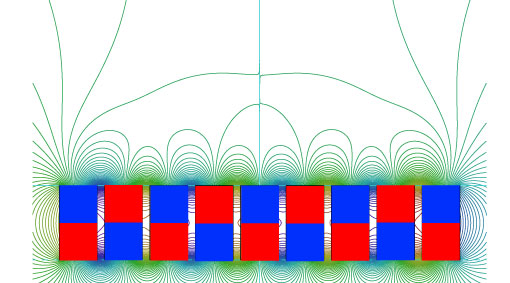
Control of Atomic Quantum States by Static Periodic Magnetic Fields
When an atom passes through a static periodic field, it experiences a time-varying field in its center-of-mass frame. This oscillating field acts on the atom in a manner similar to electromagnetic radiation and enables control of the atom's quantum state. In our lab, we focus in particular on research using periodic magnetic fields.
Phys. Rev. Lett. 124, 173202 (2020)