Department of Applied Physics, Tokyo University of Science
Department of Applied Physics, Tokyo University of Science
Artificial Life Physics seeks to understand how life-like behaviors emerge from simple physical systems.
Rather than viewing life only in terms of molecular components, we investigate universal physical principles behind self-organization, pattern formation, and collective dynamics.
Our research focuses on mesoscopic interfaces (100 nm – 1 mm), where transport, mechanics, and geometry interact to generate rich nonequilibrium phenomena.
We study transport and mechanics at interfaces, where capillarity, rheology, and interfacial stresses drive dynamic phenomena.
Nonequilibrium transport often destabilizes uniform states and generates spontaneous patterns such as fingering and lane formation.
Simple local interactions can lead to emergent collective motion, nonreciprocal interactions, and active turbulent behavior.
By connecting transport, instability, and collective dynamics, we explore how life-like behaviors emerge from artificial systems.

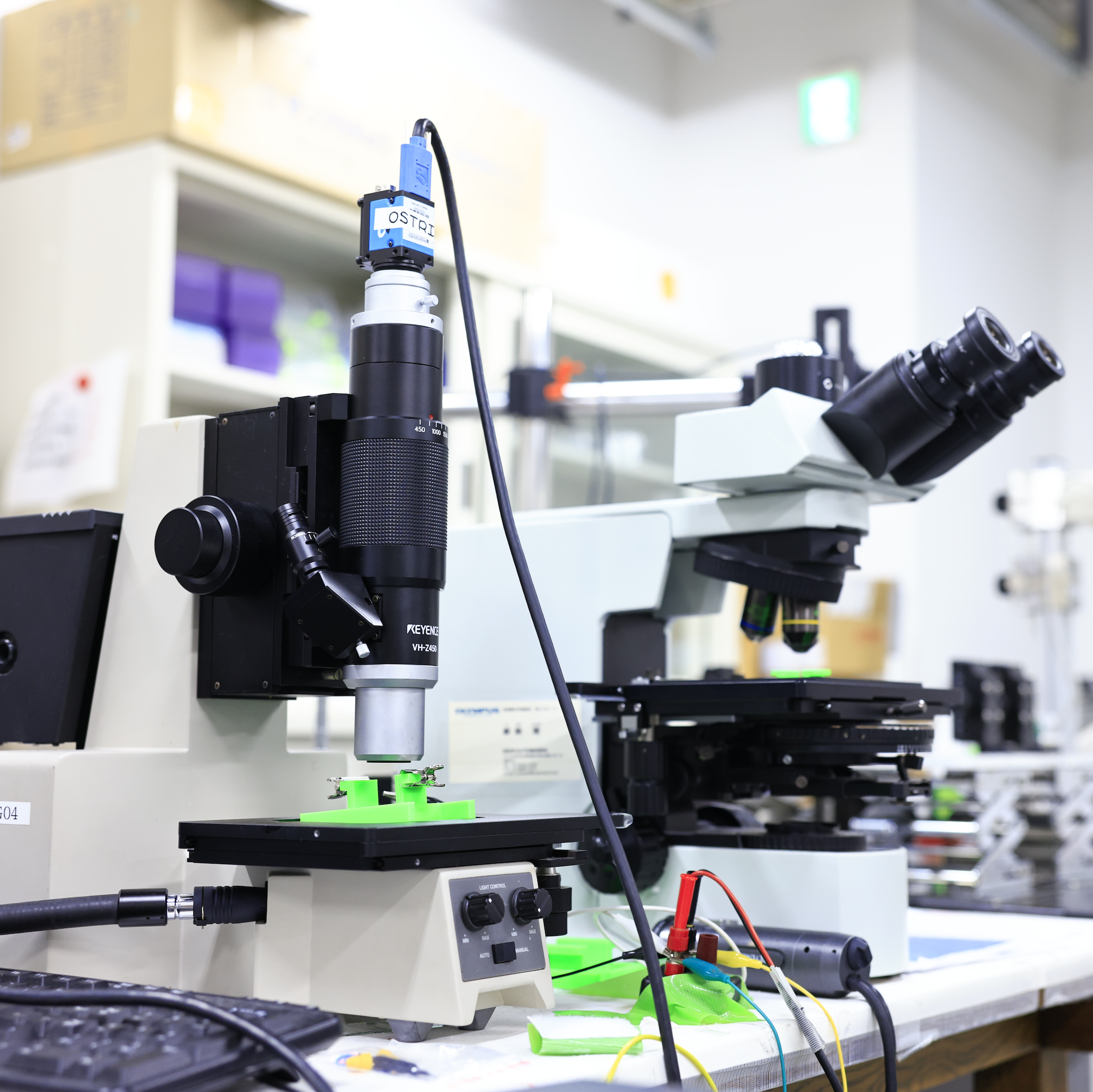
We construct simplified experimental systems to reveal fundamental nonequilibrium dynamics.

Agent-based and continuum simulations are used to reproduce and interpret collective and hydrodynamic behavior.
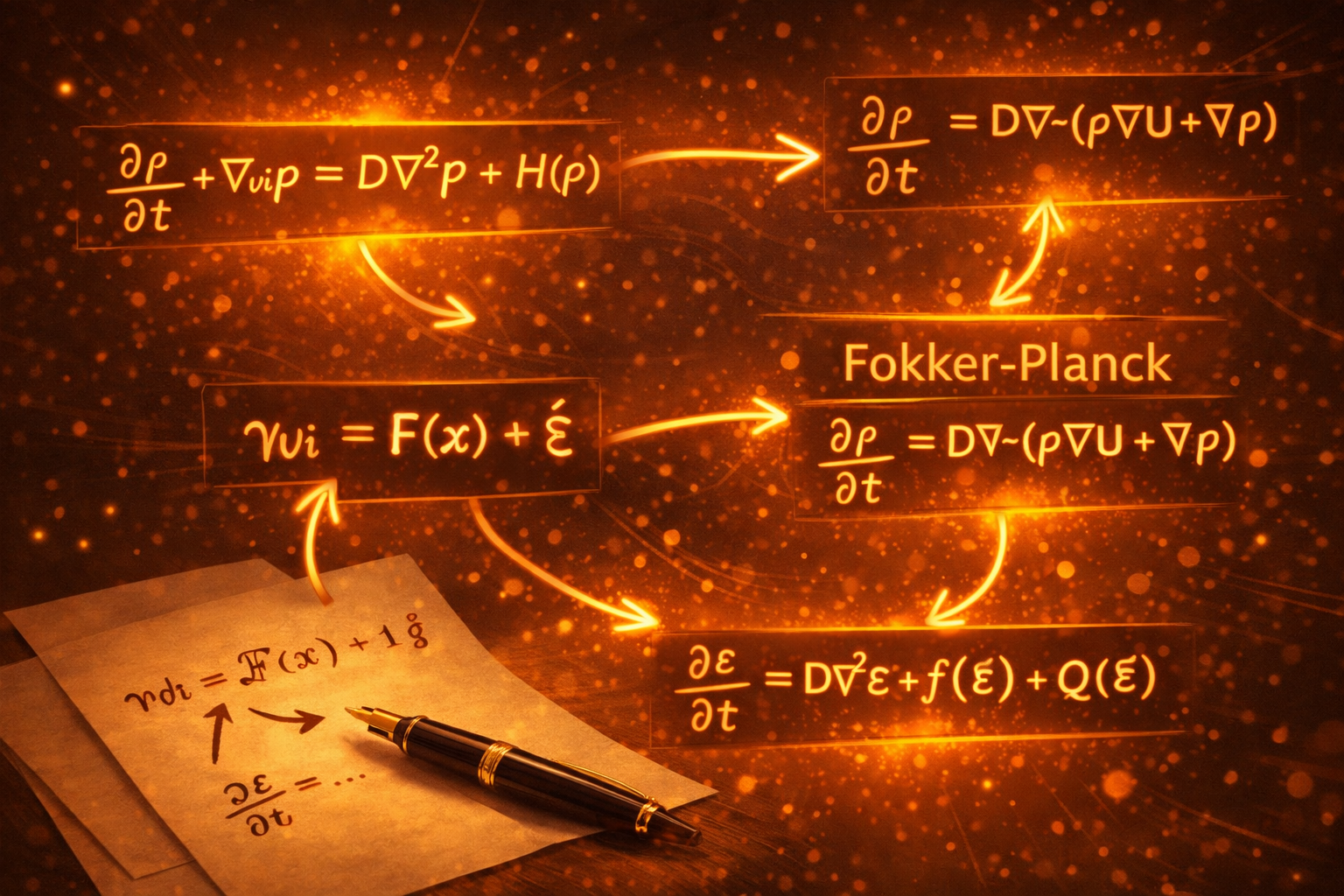
We develop simple theoretical models to extract universal mechanisms from complex physical spatio-temporal dynamics.

Research interests: Mesoscopic interfaces, Dissipative structure, Collective dynamics, and Artificial Life Physics.